|

Planning and Design Inc.: recently completed projects:
VERIZON
32 Avenue of the America's New York NY, Engineered and designed a 30,000SF turnkey tier 3, data center, incorporated 4,000A switch gear and generator to building supplied generator farm, closed loop HVAC system, fire suppression and a 3,000A 48VDC power plant of which we conducted a full commissioning test to.
165 Halsey St, Newark NJ, 15,000SF Engineered a Turn-key Data Center. from Design to commissioning within a historical building district. Permitting obtained for the installation of a 3000A, utility service, Emergency generator, UPS and HVAC.
1100 Avenue of the America’s New York NY, New 1.200 Ton BAC Evaporative Cooling Tower installed to hi-rise rooftop. Design Engineered all components and obtained NYC lift approval permitting.
600 7th St, Los Angles CA, Planned a four phase method of procedure for the installation to “hot-tap” multiple glycol cooling towers to an existing 45,000SF data/ collo center. Also engineered a major utility power service upgrade while the center was under full operation.
1200 Washington Ave, Minneapolis MN, Engineered a 24,000SF turn-key Data Center which included full designed of electrical, mechanical and plumbing components. as provided a commissioning and test validated to the location for its operation. Obtained all permitting M.E.P. which included a 4,000A 480VAC utility service, (2) 2MW paralleled generators, parallel redundant UPS and full HVAC system.
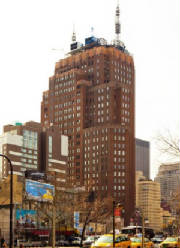 |
| 32 AOA BUILDING |
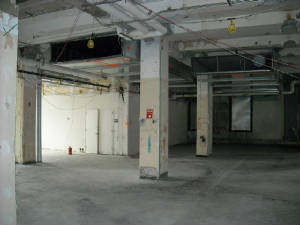 |
| (BEFORE) RAW SPACE |
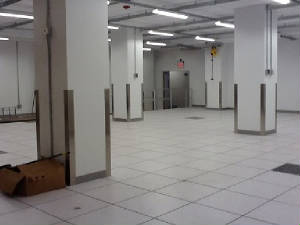 |
| (AFTER) DATA CENTER |
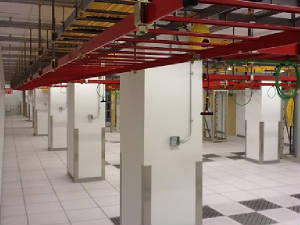 |
| HOT/ COLD AISLE |
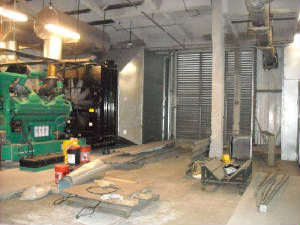 |
| (BEFORE) GENERATOR SPACE |
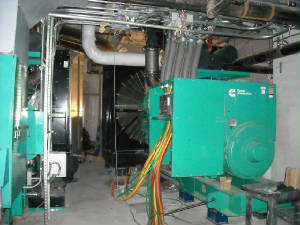 |
| (AFTER) 1 MEG GENERATOR INSTALLED |
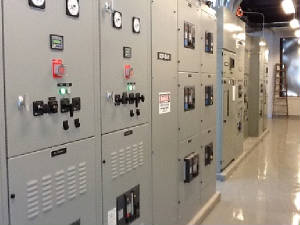 |
| 4000A 480VAC SWGR INSTALLED |
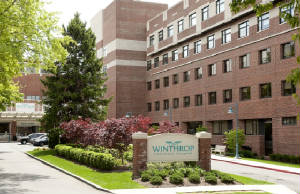 |
| NYU - WINTHROP UNIVERSITY HOSPITAL NY |
|
|||||||||

|
|||||||||

- Provided engineered drawings for hundreds of Fire Alarm system for clients to submit to AHJ for permitting in NYC, Nassau and Suffolk counties
- Signed
/ Sealed drawings are then used by electricians to install the permit approved systems.

- Performed Computational Airflow Modeling Analysis to validate collocation equipment placement to data center’s hot/cold aisle airflow design.
- Qualify structural placement and design of 48VDC plants, inverter, UPS HVAC and emergency service projects.
|
~ ACHIEVING EXCELLENCE ~
|